When Baptism Meant Repentance: The Forgotten Call to Holiness -1525

Today in Church History:
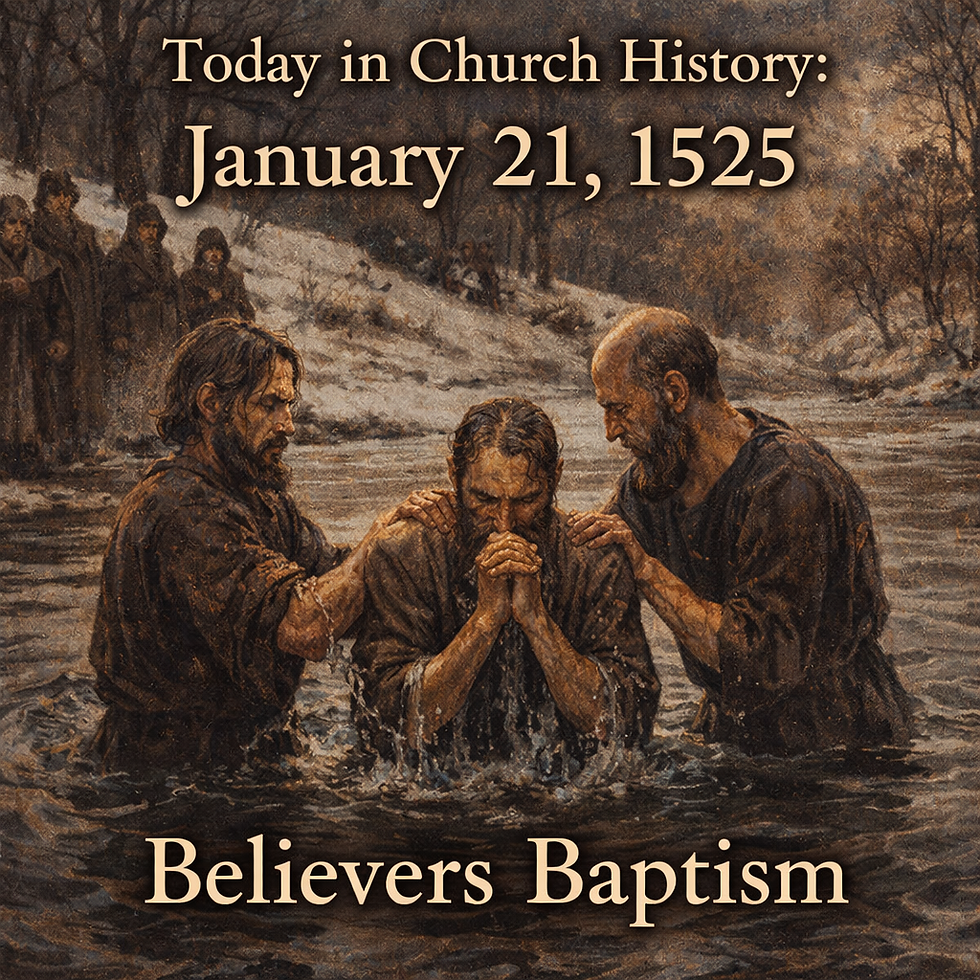
On January 21, 1525, a small group of believers in Zurich crossed a line they knew would cost them everything. After prayer and study of Scripture, they baptized one another as believers, not as infants, not as a religious formality, but as a public declaration of repentance, faith, and a new life submitted to Christ. This moment marked the beginning of the Anabaptist movement. But it also recovered something the modern church has largely lost: the understanding that baptism was never meant to be separated from repentance, discipleship, and a call to holiness.
Baptism was never “just a moment”
In the early church, baptism was not rushed. It was not used to grow numbers. It was not treated as a spiritual milestone divorced from a transformed life. The Didache, one of the earliest Christian teaching manuals, shows that baptism was preceded by instruction, fasting, repentance, and a clear understanding of the life a convert was leaving behind. New believers were taught the “Way of Life” and the “Way of Death” before ever entering the water. Baptism marked a decisive break with the old life and a public allegiance to Christ.
The Anabaptists recovered this same conviction. They did not baptize to baptize. They baptized disciples.
They believed that to follow Jesus meant:
Turning away from known sin, willing to leave behind the old life
Submitting one’s life to Christ’s lordship: loving Christ meant obeying Him
Entering a community that would walk together in obedience and love for Christ and each other
This was not a decision a baby or child could make, and the Anabaptist understood this. This was a true break from the state-church relationship, which cost many their lives. But it brought purity back into Christ's church.
Holiness as part of discipleship, not an afterthought
For the early church and the Anabaptists, holiness was neither optional nor postponed. It was understood as the fruit of genuine repentance and the evidence of new life in Christ. They did not believe holiness saved a person, but they believed a lack of desire for holiness should cause serious pastoral concern. Today, that concern is often absent. We baptize people knowing they intend to return immediately to the same unrepentant sin. We celebrate decisions while ignoring discipleship. We count baptisms while people quietly bleed. This is not grace. It is neglect.
A personal word and a pastoral warning
I know this personally. I was baptized as a 20-year-old girl in a church that knew I was living with the father of my child outside of marriage. No one stopped to ask whether I understood repentance. No one loved me enough to warn me that being baptized while intending to continue in sexual immorality was spiritually dangerous. No one asked whether I might be deceived or whether true repentance would mean a costly change of life.
I was baptized, affirmed, and sent back into the same sin.
The early church would have called this unloving. The Anabaptists would have called it irresponsible, and scripture calls it dangerous. Baptism without repentance does not protect a person; it risks giving false assurance. It risks them being in the line of judgment in Matthew 7:21-23. Had I died in that state, that is where I would have ended up, and the blood was on the hands of the leaders and the body who knew.
Why this matters more than ever
We live in an age of easy believism, where salvation is reduced to a prayer, baptism is treated as a formality, and holiness is postponed indefinitely in the name of grace. However, Jesus never separated forgiveness from repentance. He never offered discipleship without surrender. He never promised salvation without transformation.
When the church lowers the standard, it does not become more loving; it becomes less honest.
The early church and the Anabaptists understood this. That is why they were persecuted. That is why they were misunderstood, that is why their witness still confronts us today.
A call back to Scripture-even if it costs us
January 21, 1525 reminds us that baptism was never meant to make the church look successful. It was meant to mark the death of an old life and the beginning of a new one.
We must ask ourselves:
Are we making disciples or collecting decisions?
Are we loving people enough to walk with them in repentance, holding them to the new life they claim to now be living? ,
Are we willing to obey Scripture when it costs us comfort, numbers, and applause?
Are we willing to do the hard work of pulling back the wool and examining lives in love and humility so that they may be brought to maturity in Christ?
The church does not need more baptisms. It needs baptisms of people who truly understand the cost of following Jesus. The church does not need lower standards. It needs deeper love for the sake of eternal souls. Biblical love has always told the truth. Even when it costs us everything.


Comments